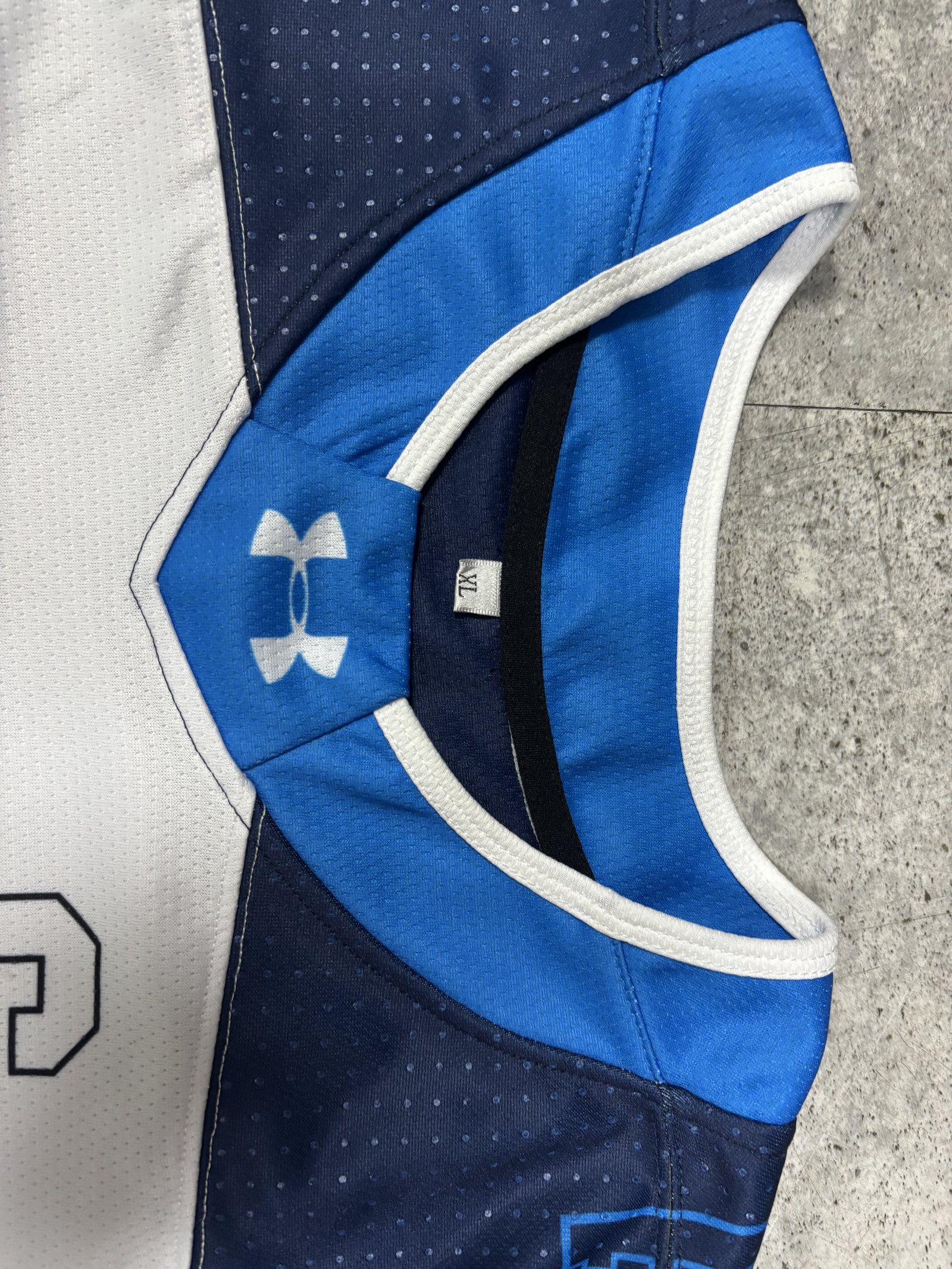
Start with the visual result you need, then review how that result interacts with the garment. A detailed all-over graphic, a small premium crest and a layered varsity number may require different processes—or a controlled combination of methods.
Match the method to the design goal
Sublimation
Useful for multi-color, all-over artwork on compatible polyester fabrics. Graphics are transferred into the fabric rather than added as a raised layer.
Embroidery
Creates a stitched, textured result for crests, wordmarks and selected branding areas. Stitch density, backing and garment weight need review.
Heat transfer
Supports names, numbers, sponsor marks and smaller graphics. Film type, application settings, stretch and washing requirements should be confirmed.
Screen printing
Often considered for defined graphics and repeat production. Ink system, number of colors, fabric and placement influence suitability.
Tackle twill / appliqué
Builds a dimensional, sewn-on look with cut layers. It can add weight and stiffness, so scale, placement and stitch construction matter.
Combination
A sublimated body may use embroidery, transfers or appliqué for selected details. Confirm each process in the approved artwork and sample.
Understand the trade-offs before sampling
- Artwork complexity: gradients, photographs and many colors generally need a different route from a simple crest or one-color mark.
- Fabric compatibility: fiber content, surface texture, stretch, heat sensitivity and garment color can affect the result.
- Garment feel: stitches, films, inks and layered fabrics can change weight, flexibility or airflow at the decoration area.
- Placement: seams, zippers, collars, mesh panels and high-stretch zones may limit usable decoration space.
- Care requirements: laundering, abrasion and intended use should be reviewed with the selected materials and application method.
- Personalization: roster names and numbers need a controlled file, spelling check, size rule and placement reference.
Consider how the jersey will be worn
Ice hockey jerseys
Review decoration over large panels, equipment fit, ventilation zones, crest weight and how names and numbers sit across the back and sleeves.
Explore custom hockey jerseys →Baseball jerseys
Check artwork around buttons and plackets, chest lettering, piping, sleeve marks and the alignment of names and numbers.
Explore custom baseball jerseys →American football jerseys
Check number scale, shoulder and sleeve placements, reinforced panels and how decoration behaves when the jersey is worn over pads.
Explore football uniforms →Approve the physical result, not only the artwork
Review color appearance under consistent lighting, edge quality, stitch or transfer finish, placement, scale, flexibility and the reverse side where relevant. Wear or movement testing should reflect the garment's intended use.
What to send for a useful recommendation
- Garment type, intended use and estimated quantity
- Artwork in the best available format, plus placement references
- Preferred fabric, color reference and sample or photo if available
- Names, numbers and sponsor marks that require personalization
- Brand labels, packaging and any testing or market requirements
- Delivery country and target date